It happened faster than I expected. One son started his first job and moved out, and then the other packed his things and left for college—all in the space of two weeks. Just like that, our full house became a quiet one. To say I found the shift sudden is an understatement. I felt knocked sideways. It was as if a door had been slammed shut on a season we hadn’t fully realized was ending. And my wife and I, as well as our preteen daughter, were left trying to figure out the new rhythms that came with so much space. One week, we were packing lunches, juggling school and practice pickup times, and planning our kids’ activities. The next, I was staring into empty bedrooms—listening to floorboards creak and the air conditioner grumbling away—and wondering what just happened.
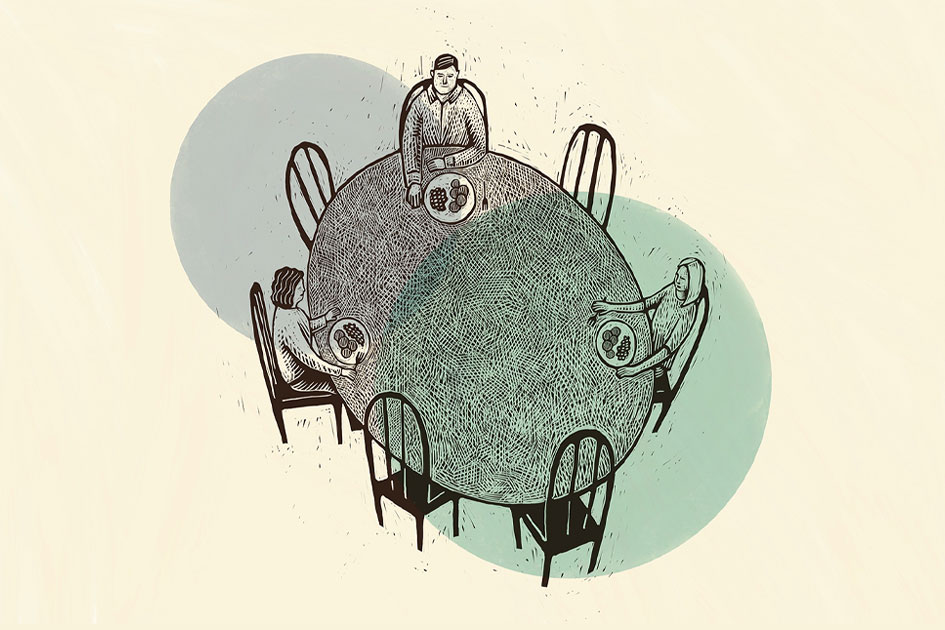 Illustration by Jeff Gregory
But the quiet gave me time to reflect, and I began to sense the Lord inviting me to change my perspective. So instead of asking, Where am I? I began to ask, When am I? The first question focuses on what’s missing and speaks to a sense of disorientation, the idea that something isn’t right. But the second helps us recognize the moment we’re in, to see it as part of a longer story and, more importantly, consider what God might want to do in it.
It turns out that how we frame our life matters.
The Teacher of Ecclesiastes reminds us, “There is an appointed time for everything. And there is a time for every event under heaven” (Eccl. 3:1). We had arrived at a season of quieter, more focused investment in each other, where “small” moments carried greater meaning. In this chapter of life, I’ve come to see the goals are different. One of the key distinctions is something we could have embraced earlier: quality of time over quantity of activity. We’re learning to listen better, connect more deeply, and walk more slowly through our days.
All of those things point to intentionality. Instead of cramming the hours full with new tasks, I’ve tried to allow a few deeper activities to fill that space. This means I spend more one-on-one time with my daughter—not just helping with homework, but listening to what she loves, focusing on her fears and dreams, and offering what wisdom I can for navigating relationships. Being intentional means planning date nights with my wife not to escape the quiet, but to embrace it together. I’ve also been able to give myself more space to hear God’s voice. More time to sit with Scripture. More opportunities to ask, “Lord, what are You inviting me to learn?”
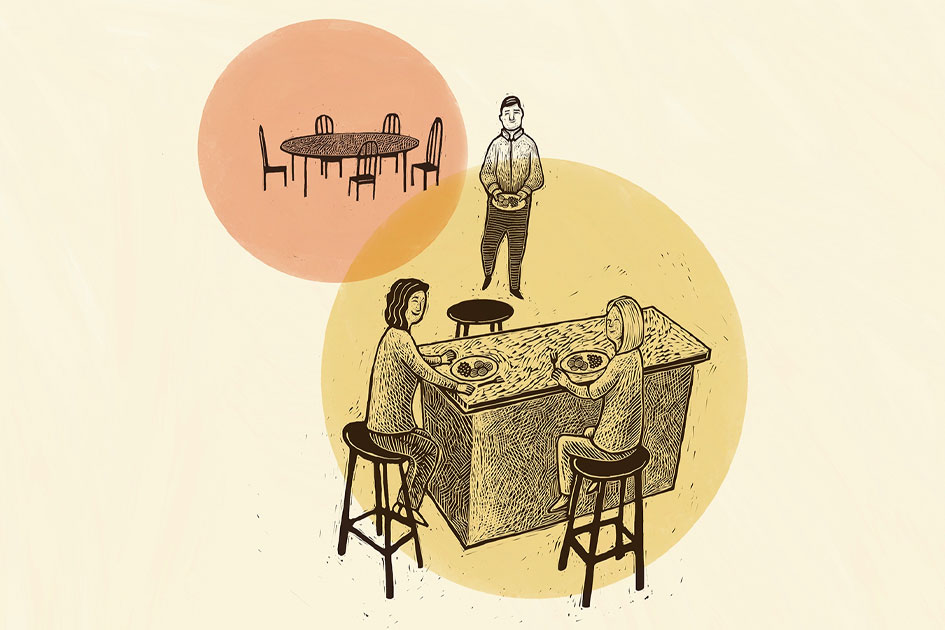
The practical changes have been relatively small. We sometimes eat dinner at the kitchen island instead of the dining table. In this “new to us” space, we’re better able to appreciate the people who are there rather than bemoan the empty chairs. But those minor adjustments reflect something deeper. They show a willingness to adapt, which is vital to navigating transitions. I cannot cling to how things used to be or allow nostalgia to paralyze me. I must receive what’s here now and trust that God is at work, even if this new season looks different than the one before.
My wife and I have once again begun dreaming as we did in our first years together. We talk about places we’d like to visit, ministries we might join, hobbies we might explore. We’re not simply chasing excitement or experience. We’re rediscovering purpose where we least expected it. After all, we haven’t stopped living just because there are fewer demands on our time.
Parenting also looks different now—though no less meaningful. Raising our daughter just requires paying attention to what this child, in this moment, needs. With her older brothers gone, my daughter talks more. She shares things about her day, the struggles she has relating to her friends. On the way to her theater practice, we belt out show tunes in the car as if it’s our own Broadway rehearsal. The activity is both silly and sacred—the kind of thing that lets her know I’m listening, present, and fully engaged. It also happens to be one of the greatest gifts I can offer.
Of course, every transition comes with questions. It’s easy to second-guess every decision—Are we doing enough? What if we’re missing something? How do we navigate what’s coming up? But along with some of the confusion I expected, I’ve also gained a deeper sense of trust that this season hasn’t surprised God the way it did me. I understand He not only provides what I need but is also Who I need—for both what’s now and what’s next.
Each season requires us to leave something behind. And when we take time to notice, we realize that God doesn’t waste any of it. Looking back, I see how the patience I learned during long nights with newborns helps me slow down when my daughter needs time to process a hard day. The flexibility I developed in the chaotic years of raising three kids helps me pivot quickly. Even the love that sustained us through challenging years continues to shape how I show up today.
So here we are in our quieter house with a lighter schedule, enjoying a life that, as it happens, is just as full as before. I want to lean into what’s here. I want to give this moment my full love and attention, as C. S. Lewis suggests we should. “Gratitude looks to the past,” he writes in The Screwtape Letters, “and love to the present.” And no matter the season, we can be sure that God is with us, ready to reveal the gifts that are ours in the current moment.