Upon return from exile, God’s people found their city and way of life in ruins. On the holy Day of Trumpets, to help them rebuild spiritually, Ezra started the new year by reading aloud from the books of Moses for hours. For us, too, recalibrating in January is helpful, even when we’re “on a roll” and may not need much redirection. Gathering, praising, and reading the Word together all help to make the adjustments that keep us on God’s path. This is a time to feed the flames—or fan the sparks—of our faith.
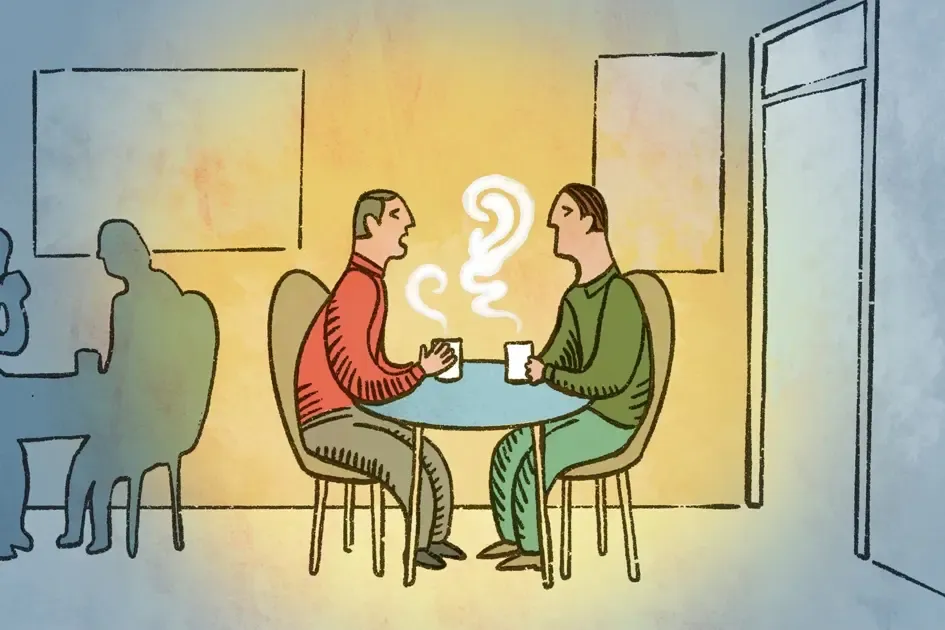
 Illustration by Jeff Gregory
BACKGROUND
The Israelites returned from Babylonia in several waves during the 5th and 6th centuries B.C. They restored Jerusalem’s walls, creating a safe haven in which to nurture their connection with God and grow as a community.
READ
Nehemiah 8:1-18, Philippians 3:7-14
REFLECT
God created cycles of time (day and night, weeks, years ...) and holy days to give us rest, serve as reminders of Him, and provide structure for life.
Like the Israelites, we may feel alone when faced with a major undertaking—or a hunger for a deeper relationship with the Lord. But God has always encouraged His people to stand together, even as we seek Him privately. What are some of the ways Nehemiah 8:1 emphasizes this togetherness? In today’s church, what does the body of Christ have to offer the individual follower who is seeking hard after God?
The first day of the seventh month (v. 2) marks Rosh Hashanah, the Jewish New Year—a holy day established by God when the Israelites were wandering in Sinai. What might be the symbolism of reading from God’s Word on New Year’s Day (vv. 2-3)? How about the practical benefits?
If our hearts are soft, tears may come easily when we feel sorrow, gladness, or regret—or are simply touched by something. Why might the Israelites have been “weeping when they heard the words of the law” (v. 9)? What emotion does today’s passage evoke in your own heart?
God is pleased by our tears of repentance, yet He also desires to comfort us. How does He accomplish this. (See verse 10.)
ADDING TO THE STORY
Jesus came to fulfill the Law and the Prophets—that is, the Old Testament—and became the new “law” by which we are to live (Matt. 5:17; Gal. 6:2).
Paul was devoted to the same law of Moses that Ezra had read to the Israelites centuries earlier (Phil. 3:4-6). But after the Savior’s coming, and through belief in Him, the apostle moved from the old covenant of the Israelites to the “better covenant” and “better promises” of salvation through Christ (Heb. 8:6). What is Paul’s assessment of the improvement (Phil. 3:7-9)?
Verse 10 (NIV) describes the new law by which Christians live—one defined by an intimate relationship with our Lord. Do you see “the power of his resurrection” in your life? What do you think “participation in his sufferings” and “becoming like him in his death” mean?
Seeking growth in Christ, Paul said, “I press on to take hold” and “straining toward what is ahead” (vv. 12-14 NIV). Do these phrases describe your feelings about spiritual growth? How is a new year a good time to “[forget] what is behind and … press on toward the goal”?
REFLECT
Scripture, community, and spiritual craving propelled the Israelites forward into a new year with energy and fervor.
In his letter to the Philippians, Paul explains how crucial spiritual hunger is, for individuals as well as communities. The same is true today. Let your gratitude for salvation and your faith in the new law of Christ fuel your growth this year.