Some of the best stories don’t start the way anyone planned. This month, we’ve got two of them: a wrong turn in Karnataka; and a continent full of pastors hungry for something solid. Both are good reminders that God doesn’t need our itineraries—He desires our attention.
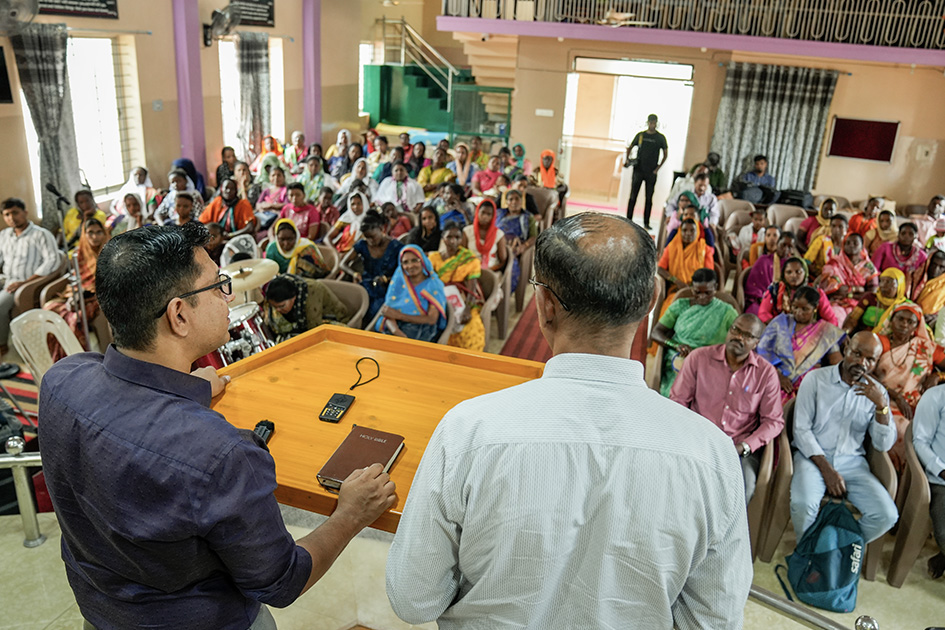 Photograph Courtesy of World Cassette Outreach of India
For our friend James Sundararajan, the attention started with a detour.
Ordinarily, getting lost while driving is a frustration that doesn’t pay off. But then there are times when the road reveals an incredible vista or takes you to a hidden landmark you’ll never forget.
That was where James, a ministry partner of In Touch and the executive director of World Cassette Outreach of India (WCOI), found himself a few summers ago when he and his family took an unexpected route on their way down to Goa, India.
Google Maps Didn’t Plan This.
Ready for When the Moment Arrives
“Google Maps told us (about) a faster route, so we went on this detour, and it took us into villages that we had never experienced,” James recalled. “Beautiful landscapes, people just having coffee or chai in little roadside shops, bullock carts, and cows. My children were fascinated because we don’t get to see that in the city.”
They entered a village unlike any other they’d seen in Karnataka. The people presented as African, but the men were dressed in lungis and the women in saris. Then James remembered that he’d read about the Siddis, a community of African descent brought to India as enslaved people in the 16th century. Isolated and without representation, the Siddis live within small colonies and intermarry. “They have their own unique language, but it’s slowly fading away. So, they’ve adopted Kannada, our state language,” he noted.
The experience left an impression on James. Within months, he’d located a pastor with connections to the Siddis, and plans were made for an In Touch Messenger distribution.
The village had a church, and within minutes of the WCOI team’s arrival, the building was full, with close to 200 people. “We provided lunch for them, and we had an opportunity to sit and chat with them just to understand their history,” James said. The visit concluded with worship—the same Kannada-language songs James enjoys in his church community.
Because the Siddi people predominantly rely on oral communication, the Messengers present a leap forward in their personal study and devotional life—giving them the tools to enjoy God’s Word outside of their Sunday worship.
“As we were driving away,” James reflected, “we saw people listening, sitting in corners with the Messenger. That’s always a good sign.”
It’s Your Time.
Starting Churches with Limited Training
Our second story takes us to Africa. Not every pastor there has access to a seminary—in fact, most don’t. That’s where our Life Principles Training, a short discipleship seminar, comes in. The training is rooted in the teachings of Dr. Stanley, and it’s designed to equip church leaders across developing nations with a firm biblical foundation.
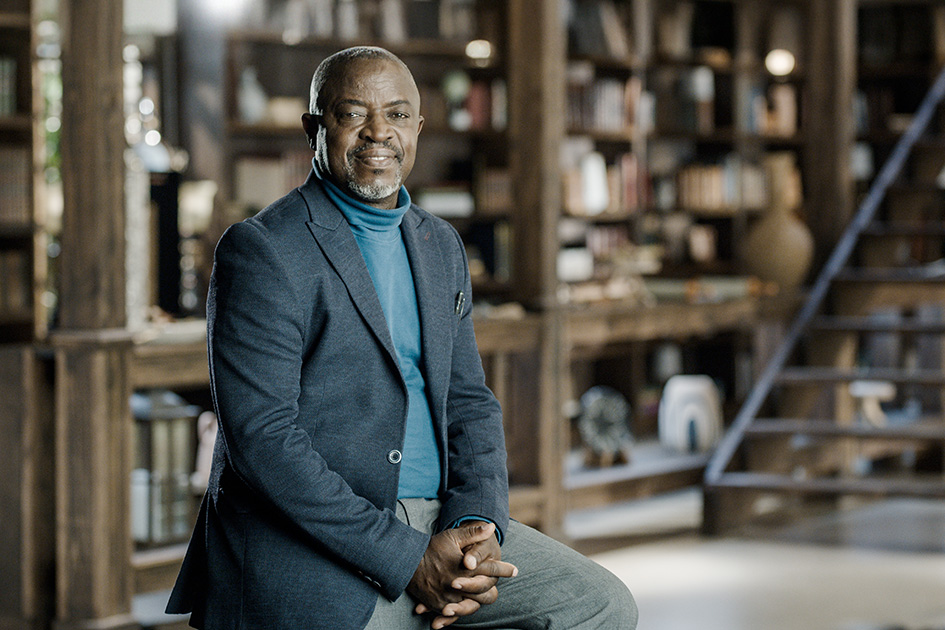 Photograph by Gary Longenecker
Mathias Sserugo is the regional mentorship and discipleship lead for Life Principles Training in Africa. He’s been a pastor for over 40 years and has been associated with In Touch since 2018. Last year, he organized more than 45 training events throughout the continent. Here’s a recent conversation with Mathias:
John: Mathias, let me ask you about Dr. Stanley. How does his teaching and experience encourage you as you lead and equip others?
Mathias: I look at a person who is not an angel, but a human being who went through life's issues and has had his own challenges. And this impacts me to know that even as I go through challenges and situations that are really tough, Christ will enable me to succeed just as He enabled Dr. Stanley.
John: What is so necessary about this kind of training?
Mathias: I will speak for Africa because this is where I come from. We have so many people who have started churches and had no chance of joining any Bible school or training whatsoever. They have not been to seminary; they just started church, and they're hitting the ground running. So, our hearts’ desire was to get something solid, based on the Word of God, that could be taught. And when we discovered the Life Principles, it was, “Yes, this is the answer to our prayers.”
John: You’ve told me that you were just 19 when you began to preach and teach. You merely stepped into an opening. And that's probably what you’ve experienced through the stories of others.
Mathias: Exactly. There is a movement of people from the villages into the towns. In the towns is where people are exposed to the gospel. And once one believes in the Lord and enters the church, they feel for their families, where they came from. Mostly, what happens next is that person is the one assigned to teach with little or no training at all. Whatever he could have got from his mother church, that's what he will teach.
John: What are the changes you’ve seen in the lives of leaders as they go through this training?
Mathias: First is the change of the individual after the conference. They will say, “Hey, you know what? You gave me a treasure. This is something I will always go by and teach to others.” After someone has attended this trainings, they don't remain the same. I didn't remain the same.
John: So, of the 45-plus conferences that you had last year, how many churches does that represent, and how many people?
Mathias: In most cases, when we go to an area, we make sure we invite as many different organizations as we can. In any one training where we have about 35 attendees, you could find 20 denominations represented. And these go back to their congregations and continue with the fire and the teaching. So, very many.
John: What has surprised you most about the lessons?
Mathias: The way the lessons are organized makes it easy to remember or understand. These are some of the things that we never do back in Africa. It's like, can you concentrate on the whole book and see what God has for you in this book? It helps whether you are literate or not.
John: There are phases in our life of faith—seasons when it is new, or when we’re older and face discouragement. How would you encourage people in these stages?
Mathias: To a new believer, I would say that coming to the Lord is the best decision you’ve made because God created you. He orchestrates everything for you to see how you are in His plans. So, continue and seek to grow from that point on. It’s like John 15:5, “I am the vine, you are the branches.” No branch can bear fruit unless it is in the vine. So, stay there, make sure you’re continuing in the Lord, and He will make you succeed. And make sure you tell others about your life in Christ.
But in our evening years, we’re tempted to say, “Let me relax. I want to sit down and wait to die and go be with the Lord.” I would say, “No, be energetic.” We have people in the Bible, like Caleb, who were 85 and strong. The older ones should speak to the younger generation and tell them, “Hey, this is the way to go. Whoever walks in life with God will never regret it.”
John: That’s a charge for all of us—young and old. You’ve carried that sense of urgency into everything you do. What keeps that fire lit?
Mathias: We must consider every moment and every season as God-given time. You must be listening to God to see what He wants you to do in such a time. Am I listening to Him? At any moment—just like Esther—it’s your time.
Thanks for spending time with this update. We’re so glad you’re here. As you go on with the rest of your day and into the next month, take a moment to consider the path you’ve taken and reflect on the moment you’re in. What unexpected turns has your story taken? What’s God asking of you now?